
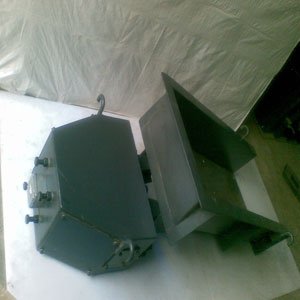
Description
Electromagnetic feeders operate through controlled, high-frequency vibration generated due to electromagnetic excitation. This is accomplished with electrical pulses and a machine that is tuned to a mechanical resonant frequency that is higher than the electrical frequency of the power supply (sub-resonant tuning). Electrical pulses in the coils create a series of magnetic pulls that attract the armature and the deck. Restoring forces in the bar oppose each pull, causing the armature to spring away from the magnet. At an electrical frequency of 60 cycles per second, the armature and the deck operate at 3,600 times per minute (the vibration rate of the feeder)Material is moved by a series of “jumps” that correspond to the frequency of the vibrations. The distance the bars travel can be changed by varying the voltage to the coils. With this variation in the length of each “jump,” or vibration amplitude, the conveying speed of the material on the feeder deck changes, resulting in a capacity rate that fits your requirements.
Warning: Undefined array key "email_link" in /home/u451262291/domains/shriramenterprisesindia.com/public_html/wp-content/themes/terrifico/social-bar.php on line 23